
People search for stucco power washing, and it is the one search where getting exactly what you asked for is the problem. These walls need the opposite: less pressure, better chemistry, and patience.
What the wall actually is
EIFS, which most people know by the brand name Dryvit, is a thin acrylic finish over a mesh basecoat over foam board. It is an assembly, not a masonry wall. Traditional stucco is tougher, but it is still porous and still holding colored aggregate that a wand can strip. A pressure washer solves a dirt problem by taking off a layer. On these finishes, that layer is the finish.
What force leaves behind
Water driven behind the finish, into foam and sheathing that hold onto it. An acrylic topcoat chipped or etched right down to the mesh. Wand stripes that are still there once the wall dries. Sealant lines at the windows worked open. And because blasted aggregate never quite matches again, a patch job that announces itself forever.
What we do instead
The solution goes on at pressure closer to a garden hose, mixed for the growth and for the finish underneath it. The algae, mold, and mildew behind the dark streaks die at the root and rinse away, and the wall goes back to its own color instead of a painted one. Plants get soaked before and rinsed after. And if a crack or a tired sealant line means water would get in behind the finish, you hear about it before anything gets wet, not after.
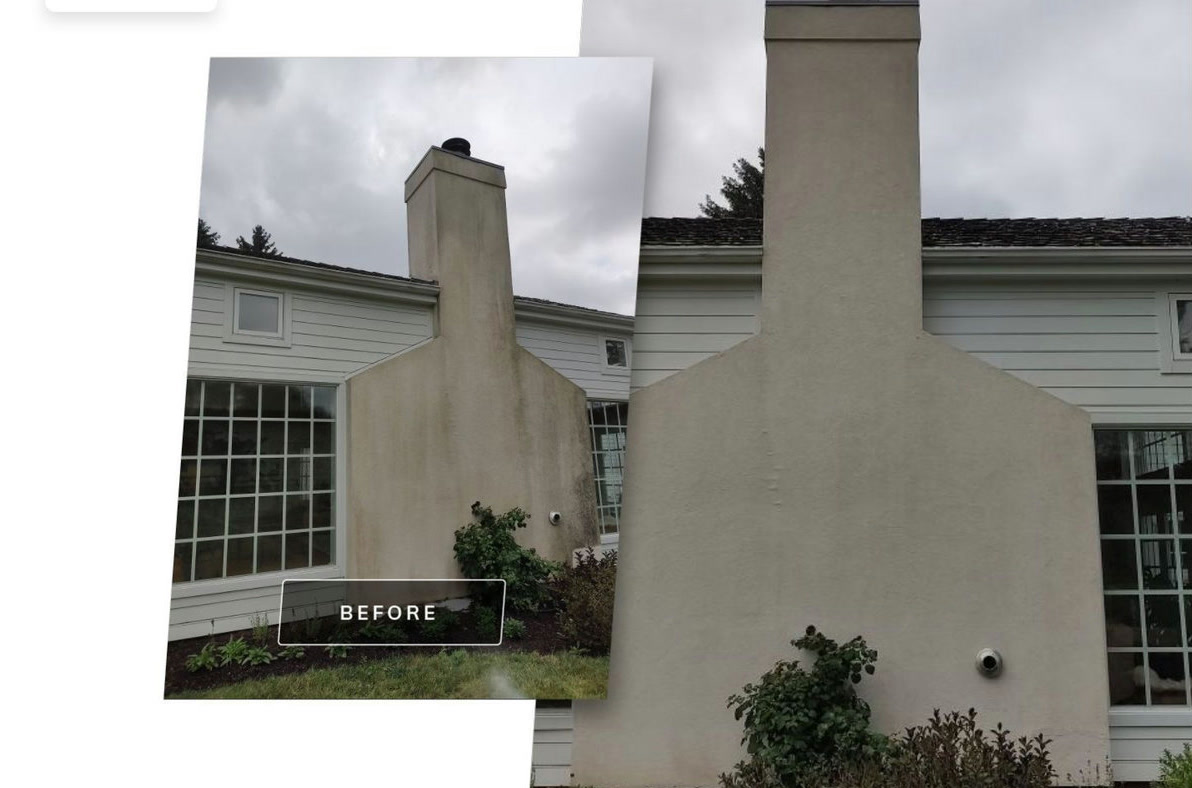
These are some of the biggest walls we clean and the least forgiving, which is why the estimate starts with a photo of the worst side. Send it over and you get a straight answer about what your finish can take.